Literature and experiences feed the mind.
Children need to be read to daily by teachers and at home by parents/caregivers.
Reading, listening, and writing develop simultaneously.
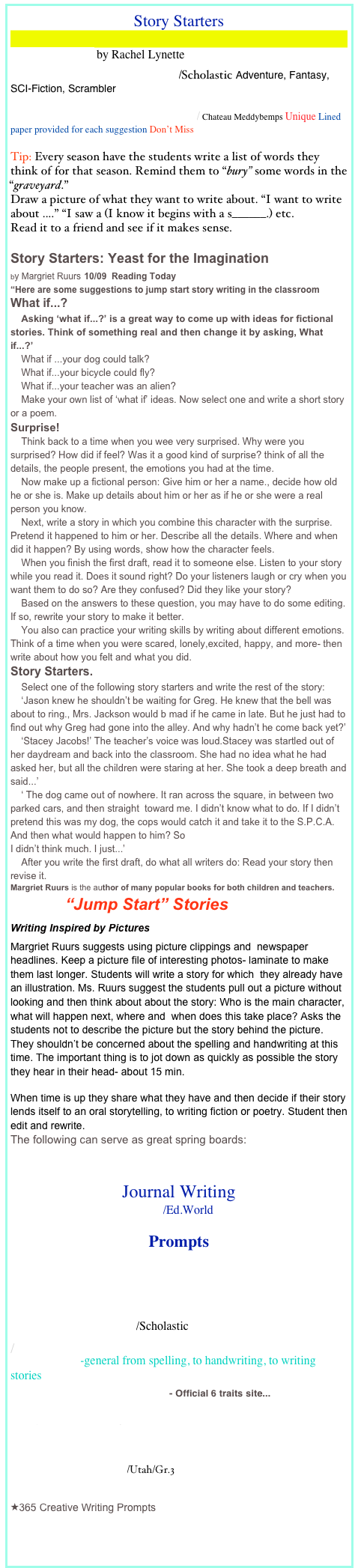
Literature and experiences feed the mind.
Children need to be read to daily by teachers and at home by parents/caregivers.
Reading, listening, and writing develop simultaneously.
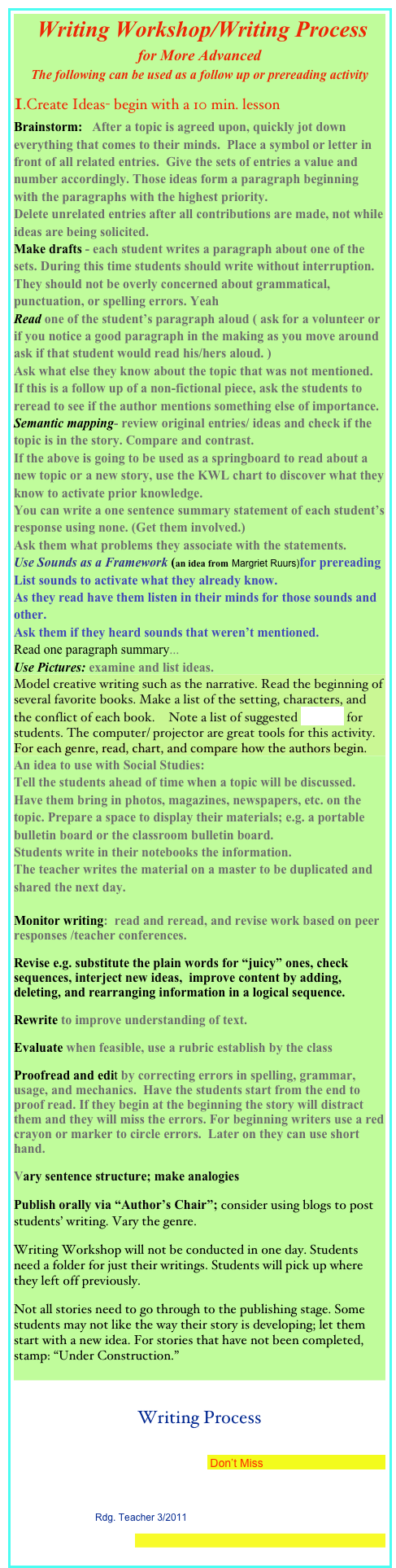
Writing Workshop for Emerging Writers
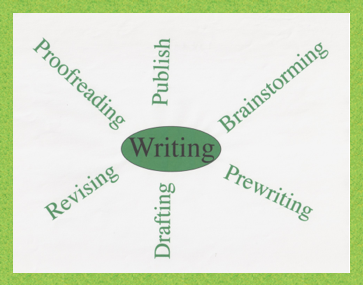
Writing Depends on Reading
Good Writing Needs Good Reading Models.
Model
Shared
Interactive
Guided
Independent
✴What Makes Writing Good? An Essential Question for Teachers. Scroll down Nauman, Stirling, Borthwick Reading Teacher
 Model-the teacher does all the work:
models the thinking process as you write. Also verbalize that process as you write on a chart, large sheet of paper, chalk board, or overhead transparency.
Some stationary stores have super large Post-it paper. It will adhere to any wall or board that the mini Post-its adhere to. It doesn’t have lines but it would be ideal for illustrating class stories or modeling the formation of letters and story development.
Marking pens, correction tape, and a pointer should be at the teacher’s finger tips. Children sitting on a rug in front of an easel with the teacher having easy access facing the children is most conducive for modeling.
The teacher develops the concepts of print through direct instruction focusing on spaces between words, left-to-right and top-to-bottom directionality, capital letters, punctuation...
 Shared Writing -teacher becomes the scribe showing how writing works. Teacher asks such questions as: What are we going to say?
The teacher demonstrates concepts of print, early strategies, and how words work. The teacher encourages the children to listen to sounds and then connect with letters.
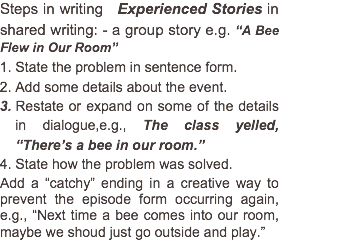
Steps in writing Experienced Stories in shared writing: - a group story e.g. “A Bee Flew in Our Room”
1.State the problem in sentence form.
2.Add some details about the event.
3.Restate or expand on some of the details in dialogue,e.g., The class yelled, “There’s a bee in our room.”
4.State how the problem was solved.
5.Add a “catchy” ending in a creative way to prevent the episode form occurring again, e.g., “Next time a bee comes into our room, maybe we shoud just go outside and play.”
 Interactive Writing -integrating language arts skills and strategies. Children actually write some of the text. Find words on the word wall. Ask directive questions:
Where do I begin to write? What directions should I go? What letter does the word begin with etc. “Apples are ...” T: “What do you hear?” (Teacher puts down the word are because it is not decodable etc.)
Teacher fills in silent letters. When possible, students take the pen and either write just part of a word or the entire word as the teacher stretches out the word. When a child takes the pen two children come up. One holds the space between words - puts a finger down for the “wide space.”
Have children listen closely to sounds in words as you stretch them out Listen to the initial, medial, and final letters in words.
Guided Writing
The teacher guides them in constructing the text by asking questions.
-Use different color markers- black for the teacher and a different color for the children. Leave a spot at the bottom of the page to teach.
-If the student spells word incorrectly, compliment the child on what s/he did get right; e.g., it certainly sounds like that but in book language it is spelled like... Correction tape can be used to cover up mistake and then spell it correctly. Have students put in the punctuation marks.
Tip: Have beginners use a flower in lieu of a period.
Repeat what has been written, “I need to go back to where I started.” Repeat what is yet to be written.
✤After the Writing Task:
-The writing is used as a text for children to reread.
-The finished text is generally a few sentences in length.
-The writing of a story can occur over several days.
-The completed story should be displayed in a prominent place for children to use as a resource for shared or independent reading as well as a resource for correct spelling.
-Post the story so it can be used as a basis for a follow up activity such as a class-made big book.
-Strategies learned, transfer to the student’s independent writing.
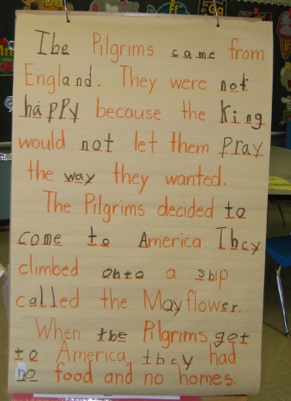
Some children in kindergarten have a good understanding of encoding as Gwyneth demonstrated with her “Book” below. Others may not have gone to pre-school and may not have paper, pencil, and crayon to use at home- the beginning of the “Achievement Gap.” They may not have been read to daily by their parents or caregivers.
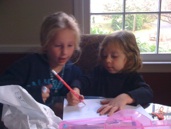
Eleanor, in second grade, with her 4-year-old-sister, Gwyneth.
★ LEA Guided Writing /U Tube
 Independent Writing -varies from labeling, using “speech balloons,” retelling,” to writing “ books.” Teacher makes sure everyone is on task and then conferences with individuals.
Write for different purposes; write in different genres; build voc. and punctuation usage. Students need to learn to write notes, letters, narratives, reports, directions, biographies, song, and plays.
-Before the children start writing, each student tells what they are going to write about and their opening sentence.
-Have the children write a book about themselves; e.g., “I bet there are a lot of things you like to eat.” After children tell about their favorite foods have them write about it. Peer Editing Toward the end of each writing session, someone sits in the Author’s Chair and reads his/her piece and then opens up a discussion about what they liked and what should be changed. Teacher may select someone during the time she/he is moving about helping individuals.
✤ Revise- model how to revise with short hand, cutting sections and replacing with tape ...
✤ Publish - publishing takes on many forms such as posting on bulletin board, posting on the Internet, sending it to a newspaper or magazine.
Publishing Links:
★
Beginners
Circular Stories
✤ Circular Stories and sequence K-1from Hot Chalk
✤ by Degrees 1/29/14
Shape Books
Below is a Shape Book culminating the activity. Students volunteered to write about different aspects of the story.
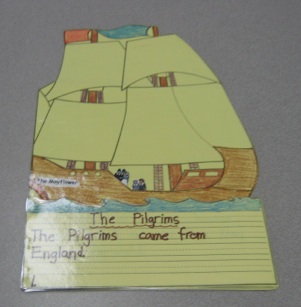
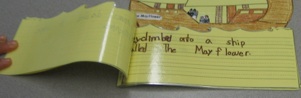
After reading the story follow up with choosing a different character such as:
I know a young farmer who planted some wheat.
In the mid fall chill, he planted some wheat.
I know a young farmer who planted some beans.
He put on his jeans and planted some beans.
I know a young farmer who planted some corn.
In early spring he planted some corn
Draw a picture of each verse, label, place a magnet
behind each picture and place them in sequential
order on the board.
“ ‘Young writers need instruction. They do not improve their writing skills simply because teachers require them to write. (Englert, 1992 Journal of Learning Disabilities, 25(3), 153-172.’ ”
Writing Response to Literature
General Tips for Writers
Extending activities: writing extends over a period of days
1.T. gives a personal experience of some one caring or a Miss Nelson/student syndrome
2. C. turn to the one next to them and tell each other about their personal experience of some one caring or a “Miss Nelson/student syndrome” -when they were kind and kindness was returned. T. listens to the groups’ discussions from her chair.
3. C. - about 3-5, tell the class about their experience.
4 C. go to their seats and write about their personal experience. As the teacher observes and conference a few each writing session she selects 3-4 children to read their story.
5. C gather together in a group and 3 or 4 children read their story aloud to the group.
6. The audience will give positive feed back and answer any question about the story which was unclear. The audience will give a few suggestions on how the author might want to improve his story. The children can edit and revise their story and eventually “publish” if they want or move on to a new story.
7. The final draft can be written on a silhouette of Miss Nelson or Miss Swamp.
Suggestion for those who are “Stalled” in reading process
a. Take down student’s exact words of the children and label “Sloppy Copy”
b. Teacher then models the process of writing by showing how to make corrections, additions, and deletions.
c. Read the story on the chalkboard or chart several times aloud before asking children to read ti on their own.
d. The piece is then recopied and punished. Put the story on a chart.
✤Enormous Kinder Garden/Enormous Watermelon/Hubbard’s Cupboard
Here is a story waiting to be written:
After viewing the video have the students write a descriptive or narrative story relating it to a similar experience.
Background information:
“Jenny and Shirley were elephants at the same circus when Jenny was a calf, and Shirley was in her twenties.
The two lived one winter together, but then were separated twenty-two years. It is very rare for elephants to display this kind of emotion in captivity, and it is probably the first time such a thing has been documented on film .”
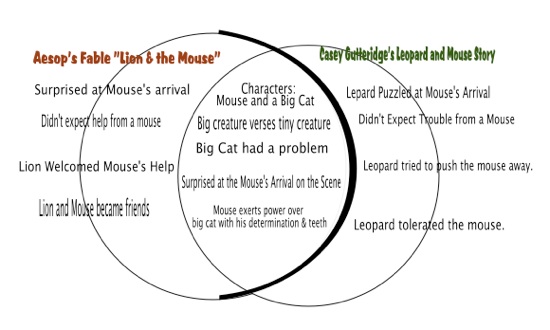
Here is a story waiting to be a springboard to imitate Aesop’s Fable,
The Lion and the Mouse;
a trickster story, or a non fiction piece.
WHAT AN AWSOME BIG PUSSY CAT!!!!!!!! MEOW..............PURRRRRR
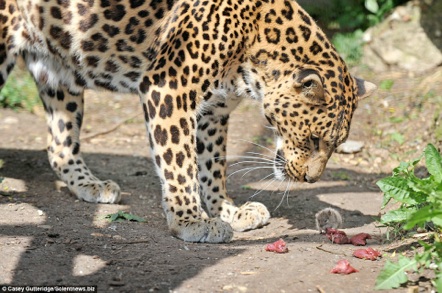
“The extraordinary scene was captured by photography student Casey Gutteridge at the Santago Rare Leopard Project in Hertfordshire.
The 19-year-old, from Potters Bar, Hertfordshire, who was photographing the leopard for a course project, was astounded by the mouse's behavior.
He said: 'I have no idea where the mouse came from - he just appeared in the enclosure after the keeper had dropped in the meat for the leopard.
He didn't take any notice of the leopard, juAlbums st went straight over to the meat and started feeding himself.
But the leopard was pretty surprised - she bent down and sniffed the mouse and flinched a bit like she was scared.
In the meantime the mouse just carried on eating like nothing had happened..
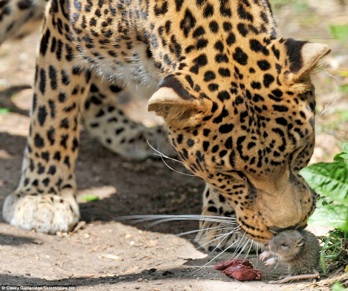
..but even a gentle shove does not deter the little creature from getting his fill...
It was amazing, even the keeper who had thrown the meat into the enclosure was shocked - he said he'd never seen anything like it before.
Project owner Jackie James added: 'It was so funny to see - Sheena batted the mouse a couple of times to try to get it away from her food.
'But the determined little thing took no notice and just carried on.' Sheena was brought in to the Santago Rare Leopard Project from a UK zoo when she was just four months old.
She is one of 14 big cats in the private collection started by Jackie 's late husband Peter in 1989.
The African Leopard can be found in the continent's forests, grasslands, savannas, and rainforests.
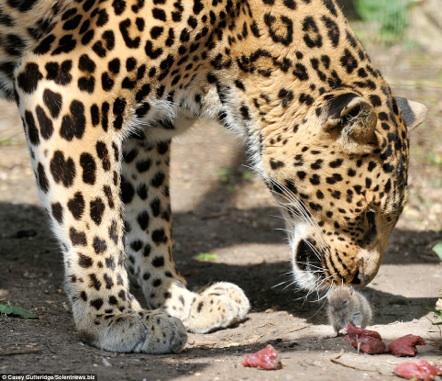
.....so the mouse continued to eat the leopard's lunch and show the leopard who was the boss. Just proves no one can push you around without your permission. “
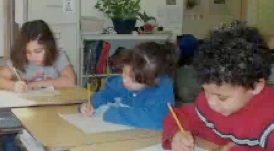
Modeling for Children
Shared -Writing Aloud
Cynthia Lord of Maine spoke with students about the process of writing her debut book, "Rules."
“Writing is “a struggle” that seems to have started in second grade when her teacher wrote on her report card, “Cynthia would rather stare out the window than get her work done.” But she was getting her work done—she was dreaming! “Our dreams,” says Lord, “show what’s important to write about.”
✤Shared Writing/Teaching Ideas
✤Modeled Writing Interactive-YouTube
Compare the following sets of picture books and use as a spring board for their own take:
Boom, Baby,Boom, Boom! by Margaret Mahy
“You have beautiful bread and honey,
You have two lettuce leaves.
Y0u have a sweet apple, peeled and pipped etc.
What a lovely lunch for a hungry baby...
Compare with The Very Hungry Caterpillar
Quack-Quack by Frederic Stehr has a similar pattern of Are You My Mother. In Quack Quack a duck is looking for his mother. In Are You My Mother a bird is looking for his mother.
Just You and Me by Sam McBrtney Mother Goose and her gosling look for a place to stay during a storm but just like The Mitten by Jan Brett and
Mushroom in the Rain by Mirra Ginsburg every place they find is already occupied.
The Red Thread by Tord Nygren compare with The Red Balloon by Albert Lamorisse Both the thread and the balloon take the reader on a trip- one through fantasy land and the other through Paris.
Hold Tight, Bear by Ron Maris has a similar pattern of Going on a Bear Hunt. Little Bear goes on picnic.
A Twisted Tale by Carolyn Fisher has a lot of rhythmic scenes and onomatopoeia as Dancin’ in the Kitchen by Marjorie Priceman and Barn Dance by Bill Martin Jr. and John Archambault.
There are countless, delightful picture books that share the same structure. What a fun way to develop the skills of writing.
Read the books, compare, relate to the students;e.g. Have they ever experienced a similar situation. Continue by soliciting a class story, then pair students off to write their own story or poem. Have children share their stories by either reading from their paper or from a transparency. With the writers’ permission, either the teacher copies stories onto the transparency or computer or the children letter it. Be careful about being critical; accentuate the positive; “I like the way ....” “You may want to think about changing.... adding...”
When a student begins to read books on level E teachers can expect students to be able to begin to write his/her own story. The student should write down the letters s/he hears. Instead of asking the child to tell you what s/he wrote, ask him/her to read what s/he wrote. The teacher compliments them for what they got correct and then tells them that “In book language the words are written like this...” and show the correct spelling. At this stage do not tell the children they are wrong. Tell them what they did right.
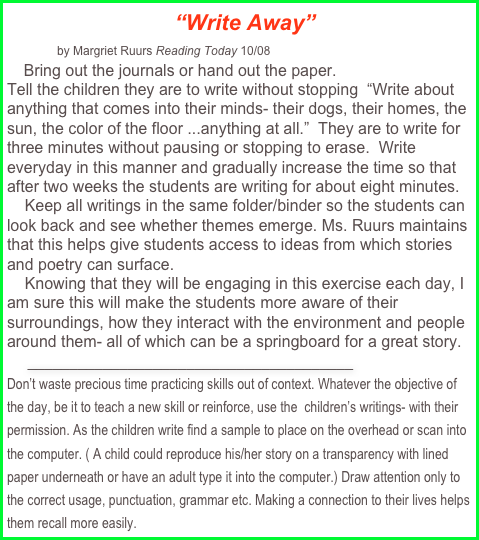
The above is a Shared Writing with first graders with Mrs. Friedman being the scribe for the basic structure.






















Persuasive Writing
in K !!!!! Get Real!
It is not age appropriate!
None the less my grandson fulfilled his assignment and wrote to his mommy,
“If you buy me pizza I will wash the floor.”
Persuasive Writing Project:
Start with a collection of some kind. Illustrating is optional.
State the object chosen- illustrate.
Rank it among the other objects in the collection; compare it with the other objects rejected and justify it one’s choice.
Ideas from my six-year-old grandson’s homework















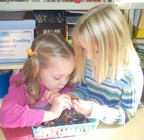
Examining rocks and agates in preparation for reading a non fiction story about rocks; then responding in writing, to the story. Rocks in His Head by Carol Hurst - Review
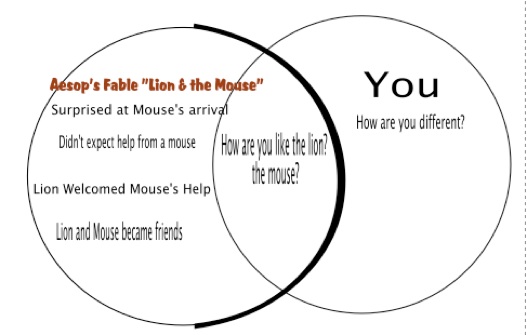
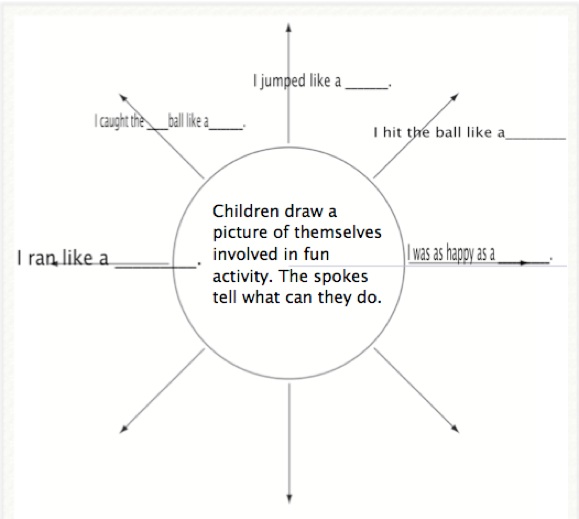
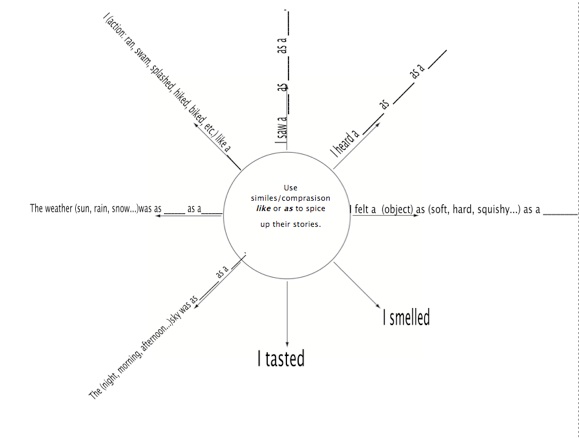
Using Similes
Spice up your stories using similes. As a follow up to reading a story use the Venn Diagram and compare their lives with the character/characters in the story. Then list similes found in the story- how the character/characters felt, what they saw, and what they heard etc. Then have the students think about a memorable day in their life. Fill in a comparable chart
Narrative Structure:
★Write “Your words. Our art. Amazing stories.”
Simple tools help you build books in minutes. Let the art inspire and surprise you as you write. Readers will encourage you along the way.
Setting: Who: are the important characters in this text?
Where did the story take place?
When did this happen?
What: problem
Conflict: Events... event...event
Why did a character do something?
How did the character do that( or feel, etc.)?
What did the character(or setting) look like?
What kind of day was it?
Solution
Somebody...... Wanted......So..........But.........So..........
Guides for Varied Genres
•How to Write a Story- How to Write Fiction/Creative Writing Now
✤Writing a Memoir by P.Garden/ 3rd Grade suggesting allocation of time for each step
✤Writing Prompts, Lessons, Activities, Poetry, Daily Story Starters /Ed. Helper
Guidelines for Summarizing Problem-Solution Passages
Sentence 1- Tells who had a problem and what the problem is.
Sentence 2. Tells what action was taken to try to solve the problem.
Sentence 3. Tells what happened as a result of the action taken.
Pattern for writing a summary of a problem-solution passage: ________had a problem because_____
Therefore, ____________________________
As a result, ________________________
Guidelines for checking Summaries of Problem-solution Passages
Check to see that:
1.Your summary has all of the information that should be in a summary of a problem-solution passage. Compare you summary with the original problem-solution passage to make sure that the summary is accurate and complete.
2.You have used complete sentences.
3. The sentences are tied together with good connecting words.
4.The grammar and spelling are correct. From Rdg. Teacher 11/’89 Author unknown
Voice
Even first graders, those who have been read to daily, write stories. My granddaughter asked her mother to be her scribe when she was still in preschool. By second grade all students are expected to write stories. The narrator’s voice - third person- is the easiest voice. The writer tells what a character does, how s/he looks; tells how s/he feels and what s/he thinks. First person does not allow a writer to get into the mind of the characters.
Margriet Ruurs in Reading Today suggest that after students read their story aloud, they might want to rewrite their story using a different voice; e.g., become one of the characters- an animal, flower, etc.
Book Reports
Adapted from The Reading Teacher
Margriet Ruurs ( Reading Today June/July 2011) quotes author of Drop Everything and Write! An Easy Breezy Guide for Kids Who Want to Write a Story by Linda Leopold Strauss as a guide to writing a story.
“Think of three strong story problems (each involving at least two characters) and write them in your journal. Decide o a viewpoint character (main character) for each story. Then, in each story, try to think of the conflict form the other character's point of view. Which character’s problem makes for a better story? Might that person be a better main character for that story?
Now choose three of you favorite books and reread the first chapter if the first chapter of each, looking for the introduction of the main character and the story conflict. Which seems more important to the writer: plot or character? Find the sentence that most makes you want to keep reading.”
Margriet Ruurs also gives Sara Ellis’ suggestions from
The Young Writer's Companion.
After deciding on a topic, Sarah suggested islands and specifically Treasure Island. Sara Ellis invites writers to “doodle” around the word. That becomes your outlined and many questions:
Are there hills valleys, volcanoes, beaches, cliff?
Are there rivers, lakes, swamps?
Name the features of your topic. This is a good chance to make up words.
Browse through an atlas, and check out some geography words like firth, estuary , sound, and isthmus.
Is the weather hot or cold? season? storms, tornadoes, hurricanes?
Plaints, insects, mammals: Real or invented?
On a primary level students could be guided into reading three books by a well loved author, e.g.,
Trinka Hacks ‘s Boa, James Marshall’s Miss Nelson, or Frank Ash’s Little Bear . Think of the scene where the character can be placed. Many settings are on the page, “Choosing a Setting>” The children should be encouraged to sketch the setting they want. Then
doodle around it what features they want in their story, the type of weather, plants etc. Place that character in the scene, e.g., Miss Nelson, Little Bear, or the Boa in a hurricane, tornado, severe rain or snow storm and a problem arrives. Instead of using the names of Miss Nelson, Little Bear, or Boa give them another name but keep the character’s behavior in mind.
Descriptive
Describing a Stone
“Pass a stone around a circle of students. Each student must say one word describing the stone without repeating what has been said. See how many times the stone can go around the circle without repeating words. Adjectives such as hard, smooth etc., are a start, but any word that comes to mind is acceptable as long as it is inspired by the stone. For example, a smooth, round, white, oval stone could suggest "egg."
from “Storytelling Activities & Lesson Ideas”
Using Picture Books to Teach Writing
Use picture books to teach young writers how to organize plot logically. This article includes examples of basic plot structures, along with picture books that use those structures.
“Write Away” Descriptive
by Margriet Ruurs Reading Today 2/3 2011
Margriet Ruurs gives tips on descriptive writing.
She tells teachers to ask their students to think of a place they know well: the school, their room at home, the mall etc. Then ask them to describe the place to someone who has never been there. They should describe without passing judgement.
Teachers are encouraged to practice writing a description with their students. Have them:
Describe the place in all its detail.
Describe both verbally and in writing with teams of two students.
Describe visually as well the as other senses: What smells do you notice in this place? What might you hear?
Read a description of a place then show a picture of it; e.g., a beach with palm trees, rickshaw in Thailand, a crowded street in China... Ask questions: Where might this be? What kind of people might we encounter there? What might life be like if you lived there?
Have your students imagine they are waking up in this new environment.
Now write a description that is personal: How would a day in this place be different from their regular life? What would you like - or miss?
Read a professional, published description of a place and compare it with the writing of the students’.
How do they differ?
Practice descriptive writing by describing a person
you know well, an object, and an animal.

To correlate social studies with language arts:
Have students look at the pictures in their social studies text. Then have them describe what life might be like from the pictures in the text. “Where might this be? What kind of people might we encounter there? What might life be like if you lived there? Then read the text describing the people or area they are going about to study.
Or before reading a story with a setting of an unfamiliar background such as Hill of Fire or a story about the jungle, write a description of what they think life is like from the pictures then read the story and compare.
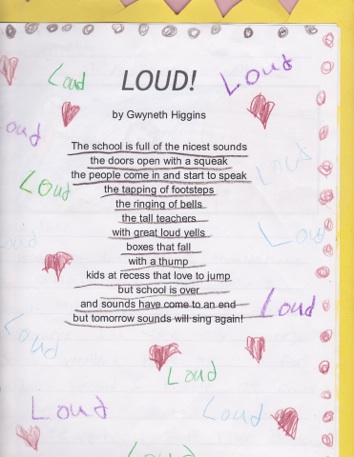
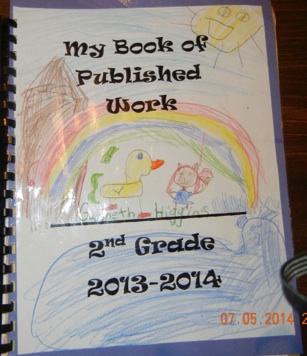
Gwyneth published work includes the poem she wrote and typed entitled “Loud!”
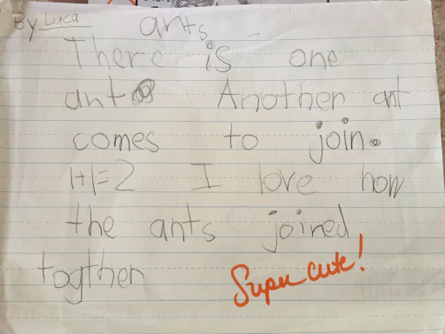
Luca Kindergarten 5/14/15
Five year old Matias wanted to imitate his mother. When she was in kindergarten she dictated a story to her teacher about her father. That story was framed and later read to Matias when he was in kindergarten. He imitated his mother’s tribute to her father, his grandfather. Matias’s poem:
The Grandpa Way
He hugs me every day
He watches the new old black-and-gray
Batman movies every day with me
(Grandpa knows how to write words, right?)
I love you Grandpa!
Spacing: For proper spacing between words, have right handed children use their pointer finger of their left hand. Place only the tip of their finger on the base line. They should use their eye to draw an imaginary line from top to bottom. Left handed children need to place the tip of their right pointer on the base line, make a dot with their pencil to indicate where to begin the next letter and remove the finger.
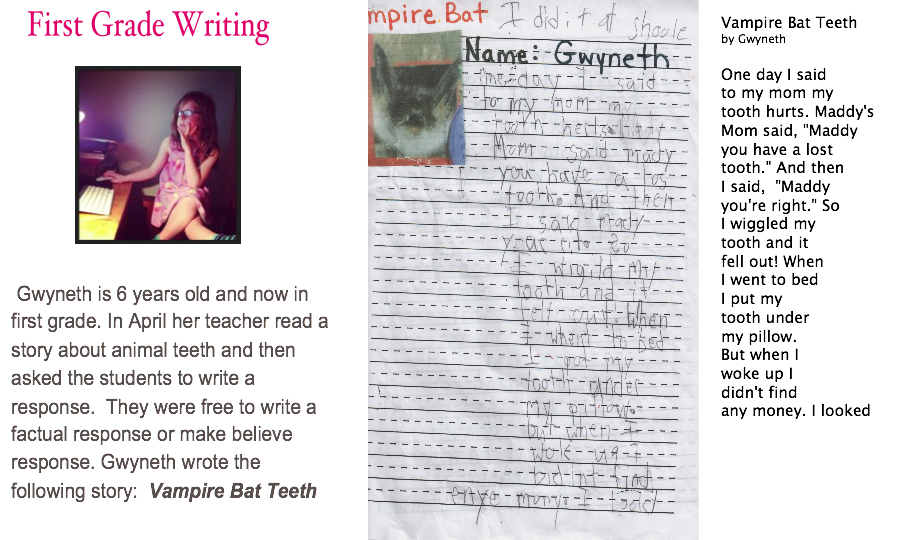
Obviously Gwyneth listening voc. far surpasses her writing/ spelling voc. Fortunate for her, her teacher allows invented spelling otherwise we could not get a glimpse of her fantastic imagination.
Her story is too long with too many spelling errors to ask her to edit the entire story; that would squelch her enthusiasm for writing. One option would be to have her edit only the first page. The second option would have her use the iPad with the Dragon Dictation app from iTunes and read her story into the program and compare her written story with that on the iPad.
It is obvious that Gwyneth has listened to many stories. Her mother reads to her every night and brings the stories to life with great theatrics. For six years she has listened to her mother read to her siblings with the same gusto.
TELL ME A STORY
by Mary Hiber (Beach Lady)
Tell me a story
Tell me right now
How will it start?
Where will it end?
Once upon a time……………
I remember when……………
Along, long time ago…………
Late last night there was...….
Tell me a story
Tell me right now
Where will it take me
From beginning to end.
Who are the characters?
What did they do?
Where was it taking them?
Why did they go? and
When will it end?
Tell me a story
Tell me right now
I’m patiently waiting
Will you start right now?
Will it be a mystery?
With ghosts, goblins and Boos
I love a “Who done it?”
How about you?
Could it be Fairy Tales
Happy endings to please
I love to imagine
Living happily ever after you see
Tell me a story
Tell me right now
How will it start?
Where will it end?
Who are you?
What did you do?
Where did you go
Why are you here?
When did you die?
Tell me a story
Tell me right now
I’m patiently waiting
Let’s get started right now!
By M. Hibert Beach Lady, Calif.
•What’s Lost as Handwriting Fades 6/9/14
•Writing with the Mouse/Meddy Bemps- writing with the mouse
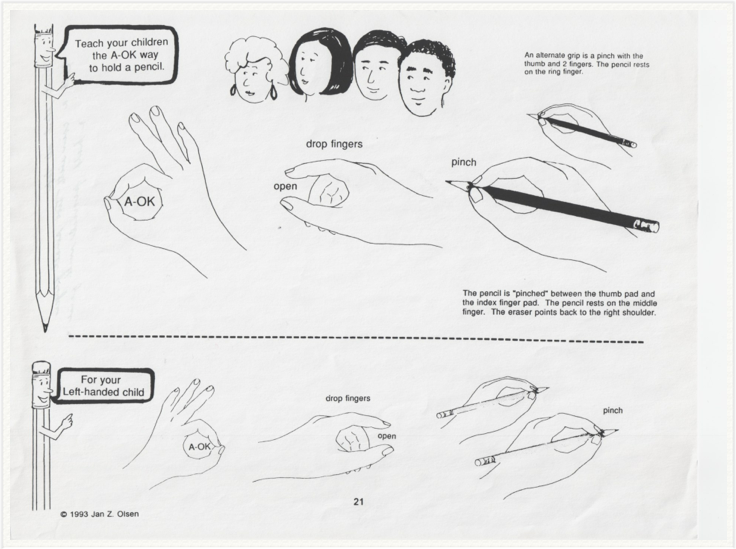
Letter formation: Proper formation of the letters is important; it is a means of communication. Keep the manuscript neat and simple - circles and lines. Sometimes it is a half a circle and/or half a line. From day one have the children hold the pencil with their pointer and thumb- pincher fingers- and resting on the middle finger with a hair line between their pointer and thumb. Some children may need physical therapy to strength their small muscles.
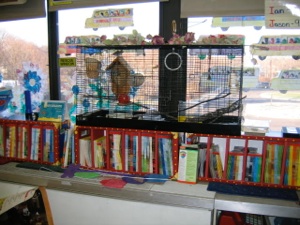
Note the bird cage. The live birds along with reading about birds, support the writing process.
Draw then Write
Mrs. Burley’s after school writing project, “Draw then Write” is used with the “At Risk” students in first grade. The students have to first draw the picture.
Publishing Writing Orally -Authors’ Night for Parents
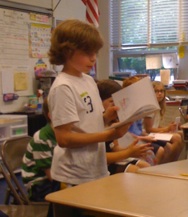
Little Chris grew up and became an author.
Tip: Have clear transparencies for each student. Occasionally have students write their response or story on a transparency. Place a piece of lined paper under the transparency. Flash their stories on the screen (Cover up their names.) - a meaningful way to reinforce skills, punctuation and grammar. Always be positive; e.g., “I like the way the author began sentences with a capital letter... ending with punctuation mark... the way the author used his descriptive words... Attacking a young writer can cut to the core and do great emotional damage.
After the story has been class edited, the student can either clear the transparency or rewrite the story on paper.
The original copy can be run off if you want to use it as a reminder of editing that had to be done.
Keep a supply of erasable markers on hand.
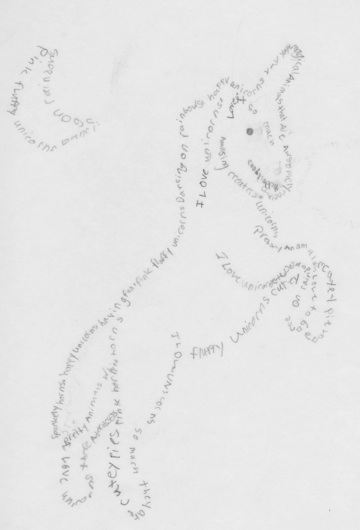
Gwyneth Higgins, 8 years old, drew the unicorn via adjectives and descriptive phrases; e.g., “…dancing on rainbows, sparkly horns, happy unicorns having fun… “
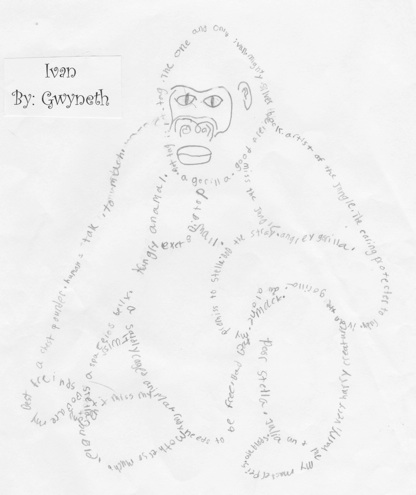
Gwyneth Higgins, 8 years old, drew this gorrilla via adjectives and descriptive phrases; “…chest pounder, human talk, hungry animal, one and only mighty, artist of the jungle, needs to be free… “
American Tall Tales
Quick Writes -
Incorporate into daily lessons.
Exit Slips
Second Grade Is Splendid /Mrs. Durning’s Fairytale
Learning Logs
There’s a Wocket in My Pocket
The Important Book
If You Give a Mouse a Cookie
Q is for Duck
Mufaro’s Beautiful Daughters
Alexander Who Used to Be Rich Last Sunday
etc.
Act Like A Writer: The Drama of Storytelling
by Margriet Ruurs Feb./March 2011 ReadingToday
Writing is storytelling on paper.
A good story has interesting characters and a plot that holds the reader’s attention. Writers use dialogue to advance the story and to bring the characters to life. Drama , plays, and movies exist almost exclusively of dialogue. Let’s combine storytelling and drama to create a good story!
1.Develop two characters (name, age, what are his/her interests, profession, type of clothing, etc.) Take notes that will help you to get to know these characters.
2.Describe the scene.
-Where will the story take place? A home? A school?
On a ship In another country?
-Describe this place in the voice of one of the
characters. ... (Choose a story children are familiar with that exemplify.)
3. Think of a problem for your two characters in this place.
-Are they lost? Bored? Is there a disagreement? Do they
have to find something or someone?
-Describe the problem in a few sentences. Writing a synopsis of your story helps to keep you focused on the plot. Have student check their favorite novels (stories) in library and read the (a) synopsis on each.
...
4. Finally, write a page of realistic dialogue for this character. Pretend you are actors in a play. Let me hear the characters talk to each other! Ask you students to listen closely:
-Do the characters talk as they a really would? A
grandfather speaks differently than a teenager.
-Does the dialogue advance the plot, give information?
-Does the character reveal a mood, an emotion?
After the dialogue has been written, ask students to read it out loud, edit it, and then share it with the rest of the class as a play.
New School Year: a New Beginning
Reading Today Aug./Sept. 2008
Tips for helping young writers from Margriet Ruturs
Ms. Ruturs states that writing is a good way to get to know your students.
Start the new year by reading aloud First Day Jitters by Julie Danneberg (Charlesbride Pub.) It is a humorous story giving your and your students something to talk about and laugh about.
Next, have them write their own story about something they are apprehensive/”jittery” about: a dentist visit, a new teacher, moving to a a new school...or write about their own thoughts and feelings about the first day of school.
Then next have a poetry activity. Ms. Ruturs calls activity Inside Me. but Ms. Ruturs says that you can give it any other title: About Me, What I Am Made Of, or any title the students choose.
She tells her students to close their eyes and think for a few minutes about what makes them different from anyone else: What do you like to do? To eat? Who do you love: Who are your friends? What is important to you? What is your favorite subject? And also: What do you not like to do? She tells them to jot down some words or sentences.
Next, write a poem. It doesn’t have to be long. It doesn’t have to rhyme. Try to use some rhythm, some alliteration to make the sentences flow.
She then tells them to read their poem after their first draft. Cross out words that make a sentence too long. If they remember something important that should be in the poem, add it.They should ask themselves: Does it say about you what you’s like it to say?
While the students are writing, tell them that you will do the same. Using the same format, write a poem about yourself. Maybe you want the students to know that you love reading, have a dog, or like chocolate, gardening... Share feelings in the poem.
Next, invite students to share their poems. Do not expect each student to read his/her poem aloud. Tell them ahead of time that they can share if they like but that they don’t have to. This will make them more secure and help them to put thoughts and feelings on paper that they may not be ready to share out loud.
Here is an example of a poem written by student a 9 yr. old.
Inside Me
by Natalie, age 9
Inside me, I’m playing with old friends
singing, laughing, having fun.
Inside me I’m playing outside,
Swinging on a swing, playing soccer.
Inside me the sun shines every day.
Later I’m alone again but that’s okay.
Any day with my friends is a perfect day.
Ms. Ruturs says have fun reading picture books and writing poetry every day for the rest of the school year!
Plot
“Picture books are especially useful in identifying plot. Read Piggie Pie by Margie Palatini and The Paper Bag Princess by Robert Munsch to your students. Discuss the problem. How is it solved in an unexpected twist?
The plot of a story is usually built around conflict. Facing the conflict and solving the problem are what make the story an interest read. Encourage students to plan a story by creating strong conflict. You need not know exactly what will happen but it is a good idea to outline some of the major components of your story.
What kind of problem will the main character face?
How might your character sole the problem in a realistic manner?
Have students plan their story in three main parts:
Beginning: Introduce the main character(s) and setting
Middle: Tell what kind of problem the main Character will face.
End: Describe how the problem was solved.
As you write your story you may find your character doing things you had not planned. This is great! It means that your character is really coming alive. The way in which the problem is solved at the end of the story, however, must be believable. Even if the story is fantasy, (for example, fighting a unicorn) you must convince the reader it could really happen. As an example of this, read Hatching Magic by Ann Downer.
A good example of problem solving happens in one of my favorite books, Shadow Spinner by Susan Fletcher. Hopefully you and your students are familiar with the legendary Persian queen. Shahrazad, who tells stories for 1,001 nights to save her life. The problem is... where does she get the stories? It falls to Marjan, the book’s main character, to help Shahrazad find new stories. Brilliantly written, the book not only solves the problem but gives us an intriguing glimpse into life in ancient Arabia.
In a satisfactory story it is not even necessary to have a happy ending (for example, Katherine Paterson’s Bridge to Terabithia).
Usually the character grows through the process of facing problems and solving them. (Think of Brian in Gary Paulsen’ Hatchet.)It is a good idea to perhaps with help from others- but we want to see that main character triumph!”
Margriet Ruurs
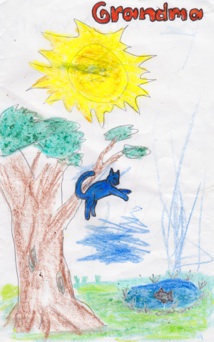
3 Yr. old Keanu dictated the story he wanted his father to illustrate;e.g., cat jumping out of the tree into the fish pond to catch a fish.
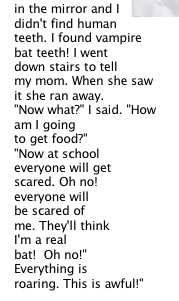
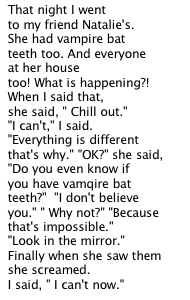
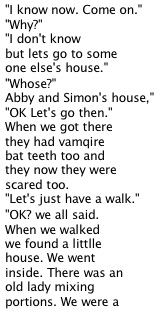
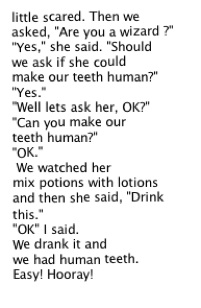
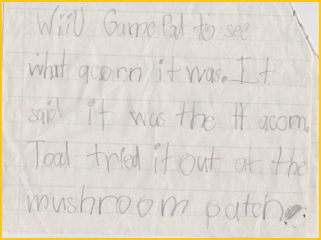
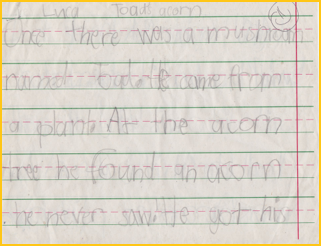
Toad’s Acorn
P.1Once there was a mushroom named Bad. He came from a plant. At the acorn tree he found an acorn he never saw!
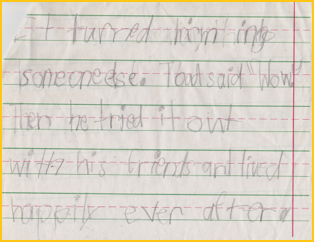
P2 He got his Wii V Game Pad to see what acorn it was. It said it was the H acorn. Toad tried it out at the mushroom patch.
P 3 It turned him into someone else. Toad said,”Wow!” Then he tried it out with his friends and lived happily ever after.
Luca Second Grade 2016
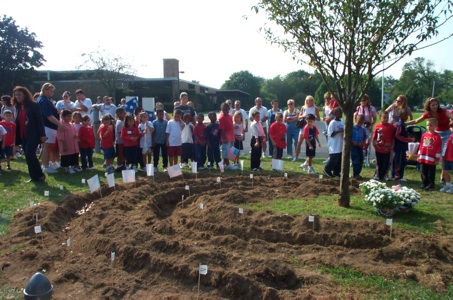
Seeds
A little seed for me to sow
A little earth to make it grow
A little hole, a little pat,
A little wish, and that is that,
A little sun, a little shower.
A little while -
And then, a flower!
Tommy
I put my seed into the ground
And said, 'I’ll watch it grow.’
I watered it and cared for it
As well as I could know.
One day I walked in my back yard,
And oh. what did I see!
My seed had popped itself right out
Without consulting me.
Letter writing by a first grader under the yoke of CC.
This is not an appropriate task for first graders especially not for At Risk children. However, it is a good template for second and third graders who are not held under the yoke of CC.
As Professor David Elkind, Ph.D., author of “The Hurried Child” stressed, don’t steal the children’s childhood away from them by imposing tasks upon them which is not age appropriate - too challenging for them. Marie Clay maintained that we should present a challenge that can be met - not to see how far you can push them. Children will progress rapidly if they can meet their challenge. It will give them a feeling of success; develop confidence; and a desire to forge ahead.
All the illustrations, stories and poems posted of children’s work is the result of their parents having read to them from day one - every night. As posted on the Family Reading page, children’s minds are fed and their imagination is stimulated by listening to great literature. Independent recreational reading serves as another channel to support their creativity.
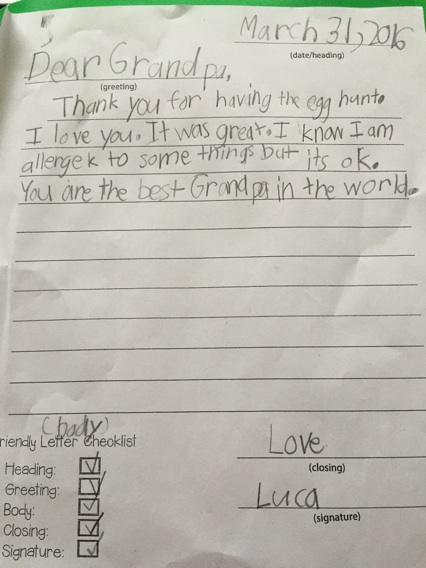
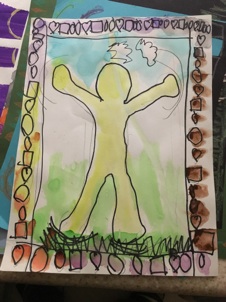
Luca, First Grade
Luca, June, 2016 - First Grade
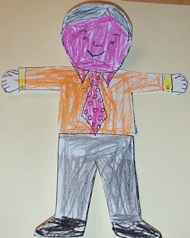
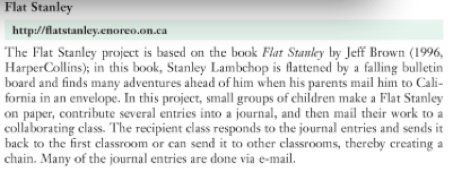
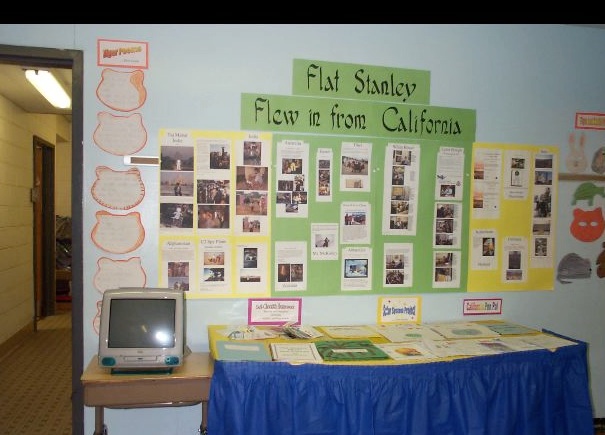
Flat Stanley Project
by Charlotte Zolotow
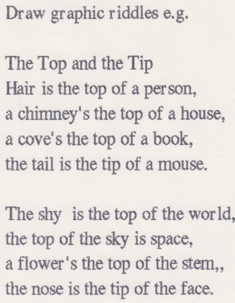
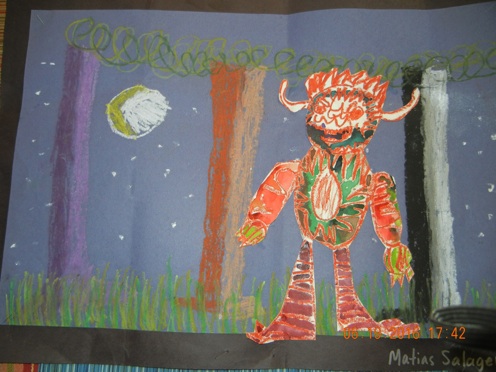
Matias, June, 2016 - First Grade “Where the Wild Things Are”
Everything the students study should be related to the students in some way but CC didn’t want background knowledge to enter the picture. CC limited higher order thinking skills of analyzing and comparing to “close reading.”
Common Core ignored the interactive approach using the direct teaching, skills-based approach.
Einstein, also, stressed the importance of developing the imagination.
★Einstein said that great scientists were also artists. What does CC give the students: math without music. They get knowledge without imagination.
Affective realm is not developed via expository text nor is it assessed with standardized testing. Every child comes with different skills, abilities, talents, interests, and different ethnic backgrounds. Add to that their environmental surrounding. Placing emphasis on learning more facts to augment the students’ knowledge base in lieu of developing the affective realm is problematic. Through narratives we study the whole person: soul, mind, and relationships in life; the sense of right and wrong; a conscience, empathy and respect for other.... Expository text fills the brain with facts but not food the soul. Laughter, e.g., is good for the body and the soul which great children's authors manage to ignite among the most daunting themes.
Imagination Must be Developed and Nurtured at Home and In School
At the age of five, Paul came down the stairs with a note pad in his hands. He asked his father how to spell his name. His father responded with “Dad” and then asked him why he wanted to know. Paul, five years old the summer before kindergarten, said, “I am writing my Life Story.”!!!!!! Paul had a page for every sibling and his parents. The last page was a drawing of a person screaming. When his father asked him about that picture, Paul responded, “That is a picture of a stranger.”
This creative mind began five years ago when his parents sang and read to him and his brother every night. Eventually the boys could choose three books they wanted read and the person they wanted to read their story books.
The year Paul was in pre-school his father also became a story teller. Each night creating a new episode for his story.
However, the first day of kindergarten when his mother greeted him as he got off the school bus and asked,”How was your day?” Paul
responded annoyingly, “I still can’t read!”
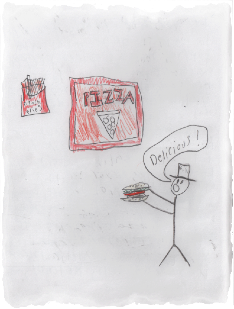

Chris at age 9
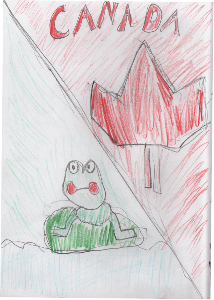
Chris at age 10

15 Better Ways to Teach Writing and Self-Expression
AUGUST 13, 2017 BY NANCY BAILEY 2
1--Teach cursive writing to children. Working on writing letters is relaxing, and kids take pride in developing their personal writing style. It also highlights the importance of writing. The exception is a child with motor disabilities.
2Validate students by telling them that their writing is important. Let them know their words are important. If students don’t believe anyone cares about their words, why should they care about writing?
3Start with journal writing everyday for 15-20 minutes. This gets students warmed up and in the mood to learn how to write better. Give students topics to write about, or let them write whatever they want. Look at journals later to figure out how students write. This is their baseline work. Don’t correct. Writing in student journals should improve as time goes on.
4Correct student writing. After free writing for awhile, tell students you will correct special pieces of their work–the writing which they take most pride. Correct their work, and have students rewrite with corrections. Grade that second paper where they have added the corrections. Praise them, of course, as they so deserve.
5Showcase student writing. Every student should have their fine writing displayed for all to see. This can be on a wall or in a self-published book.
6Writing mechanics is also important. Along with journal writing, students need to work on writing mechanics. If students understand that constructing good sentences will help them to express themselves better, they will be more likely to want to learn how to be better writers. Teaching only mechanics ignores what makes writing most important for students.
7 Both self-expression and writing mechanics go together. Diagram sentences when students are old enough. This can be fun when presented in an interesting way.
8 Some drill and practice is necessary. Worksheets or exercises on paper or computer are helpful. Just don’t overdo.
9 Learning to be good writers is most important before writing on a computer. The exception, as noted before, is a child with fine motor writing difficulties who can more easily strike a keyboard.
10 There are many programs to assist teachers with students who have learning disabilities and difficulty writing. Qualified teachers know which programs they are most comfortable working with in their classes and which ones work for their students.
11Poor spelling and reading holds students back. Spelling, writing, and reading go together, of course. Some children will require more help with spelling and reading.
12Young children and older kids have amazing stories to tell! It is a thrill for students to dictate their stories to their teacher. Let young students copy those stories later on paper. This helps them see how wonderful writing can be. Teachers of young children often have the class tell them a story the teacher writes on large chart paper. This makes words come alive and socially brings children together.
13Kindergartners should not be pushed to write on their own too early. It’s troubling that Goldstein casually states that kindergartners are already writing paragraphs. This seems premature. Like reading, if children are pushed to write before they are ready, they will see it as drudgery.
14Writing on paper is important. Goldstein gives too much importance to writing on the computer. She fails to note her sources. Learning to write on paper is the most important first step. Once a student writes well on paper, writing on the computer is a cinch.
Computers are great for writing once a student knows how to write. I don’t know anyone who wishes to go back to the typewriter. Spell and grammar checks are helpful, but they won’t miraculously fix poor writing.
Helping Struggling Writers Succeed:
A self-regulated strategy. instruction program by Lisa Helsel & Daphne Greenberg May 2007 Rdg. Teacher
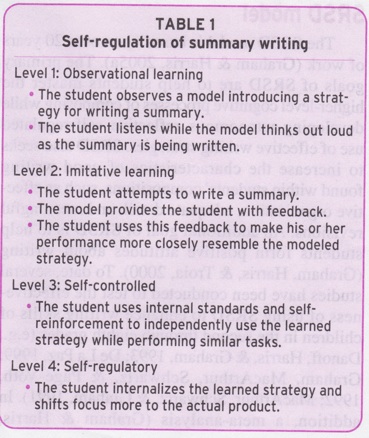
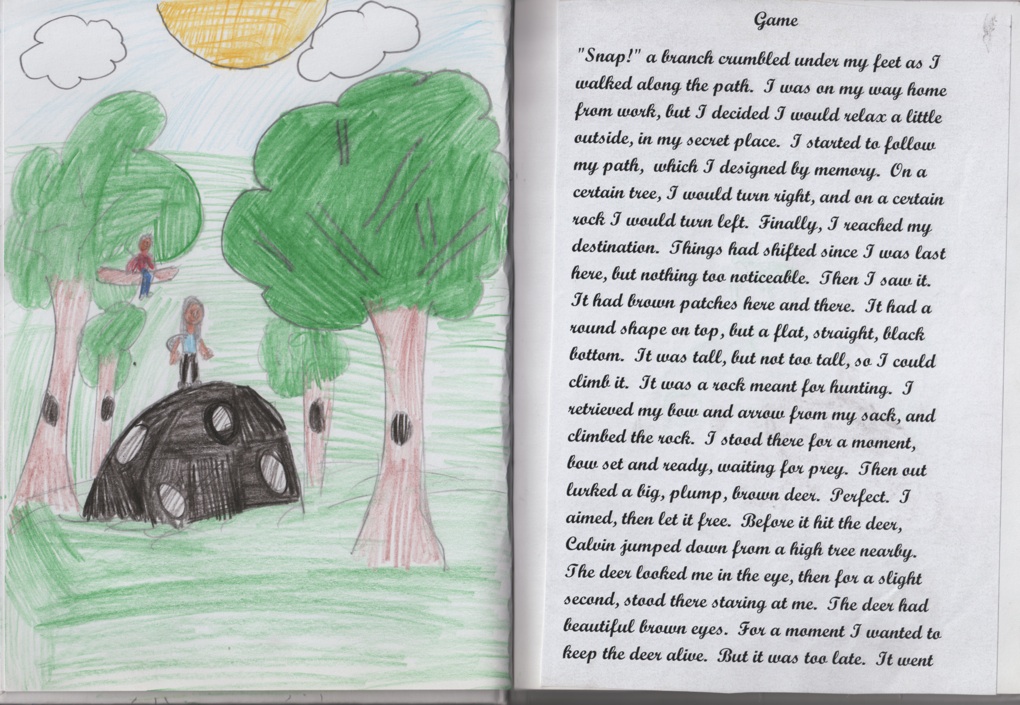
( Avid Listeners and Readers Make Creative Writers.)
Ellie: Grade 3
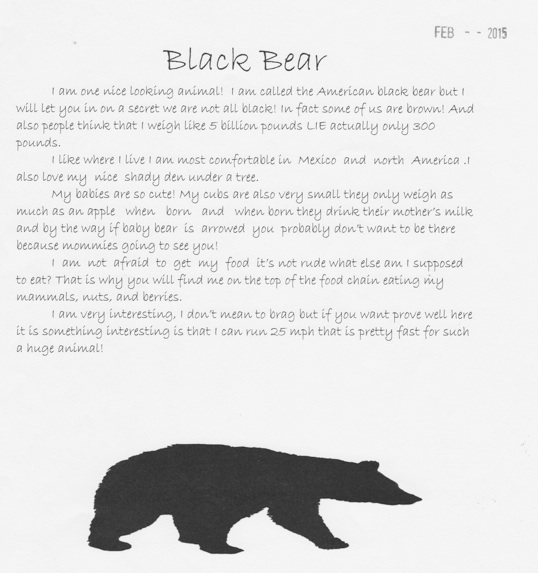
Written & typed by Gwyneth Higgins Third Gr. Age 8
Gwyneth personifies the bear.
How to Write Magical and Mystery Stories
★The Making of a Mystery Lesson Plan Scholastic Gr. 3-5 Don’t miss the side bar with many suggestions and ideas
“Michael is rowing his boat on a pond at sunrise.
See? : water, waves, ripples, flowers, grass, lily pads, fish (eel?), frogs, dragonflies, ducks, swan, trees (pines, oaks, or maples?), other boats, house, log, dock, people, clouds, bubbles, rocks, sand, reflections, alligator, turtle
Hear: croak, pop, buzz, splash, whoosh (wind), quack, crunch, plop, rustle (leaves), voices, laughing, chirp, thunder (rumble), snap, hiss, squeak (the rusty oarlocks, or a mouse)
Feel: wind, wet, rocking of the boat, sweat, raindrops, wooden oars (in his hands), tired, sleepy, warm sun on his face
Smell: roses (garden), smoke (fireplace), barbecue, dead fish
Taste: candy, chocolate, gum, sweat, peanut butter sandwich
I reminded this class that they need not include all five senses on their opening page. If Michael is rowing a boat, he may not be eating at the moment. This is the writer’s choice. The parentheses above are my doing, as I push my writers to be specific, to use precise language. Readers cannot visualize a ‘fish,’ but a mind readily captures the image of an eel. Keep a wary eye for students who generalize. Have them name flowers, or trees, or fish, or birds.
At this point, I create an opening paragraph using some of their words, which I underlined:
“Michael pulled on the wooden oars. The boat rocked forward on a row of ripples. Frogs croaked from the lily pads and the sweet smell of roses drifted across the water.”
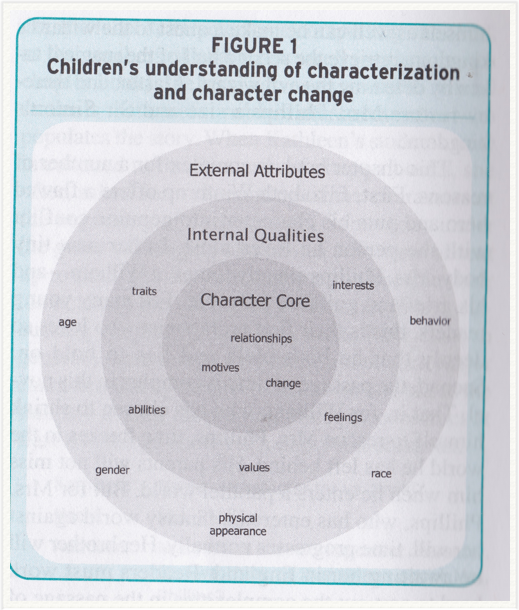
“Whether the written narrative is fiction or non- fiction in any genre, how does the opening page reveal the attributes of character , emotion, setting, conflict/tension, sensory details, precision language, and pacing?”
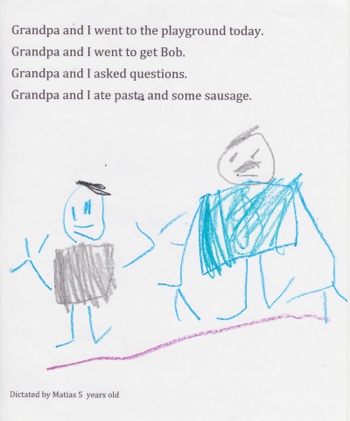
Dictated by Matias 5 years old
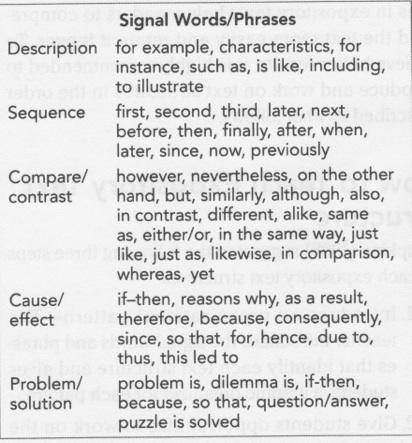
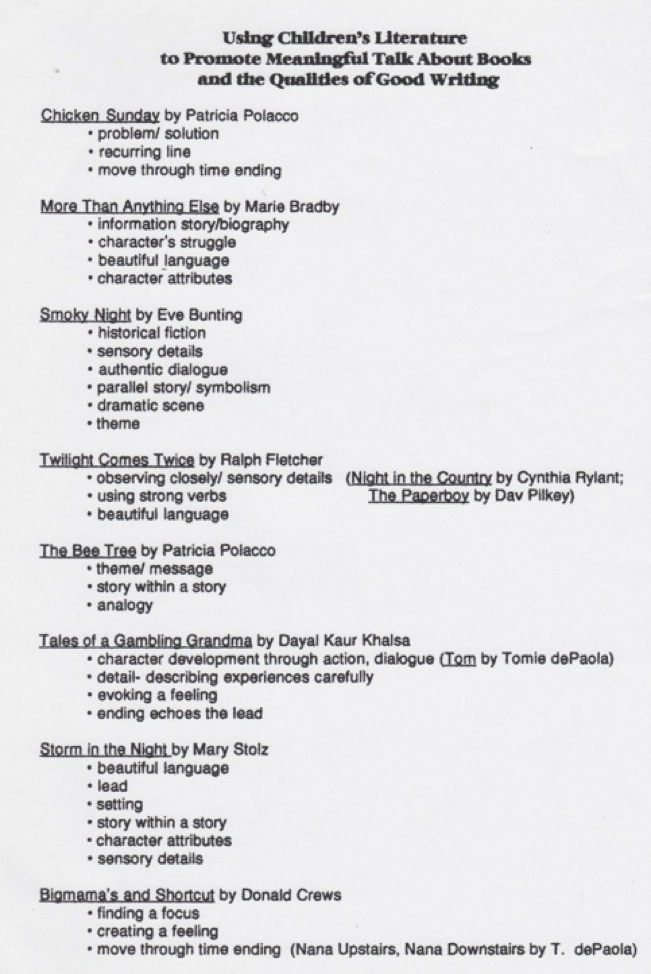
Guides for Varied Genres
★Online Writing Resources for Students
•How to Write a Story- How to Write Fiction/Creative Writing Now
✤Writing a Memoir by P.Garden/ 3rd Grade suggesting allocation of time for each step
✤Writing Prompts, Lessons, Activities, Poetry, Daily Story Starters /Ed. Helper
6 TraitWriting for Teachers- Literacy Resources
★ Create Your Own Story with Story Maker Billy Bear Storybook
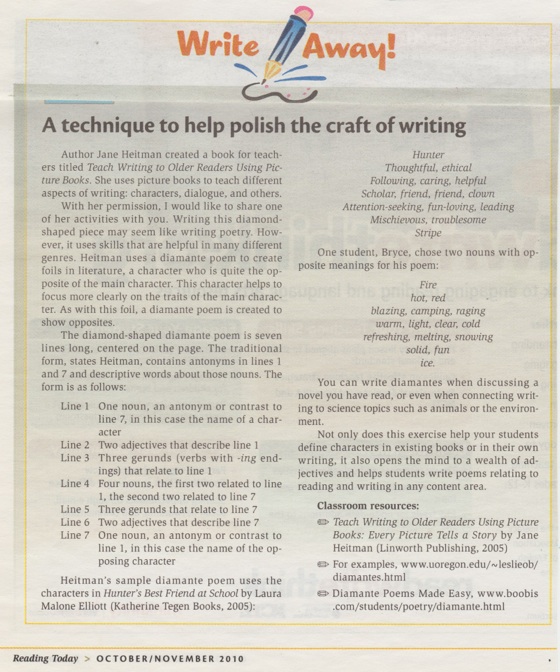
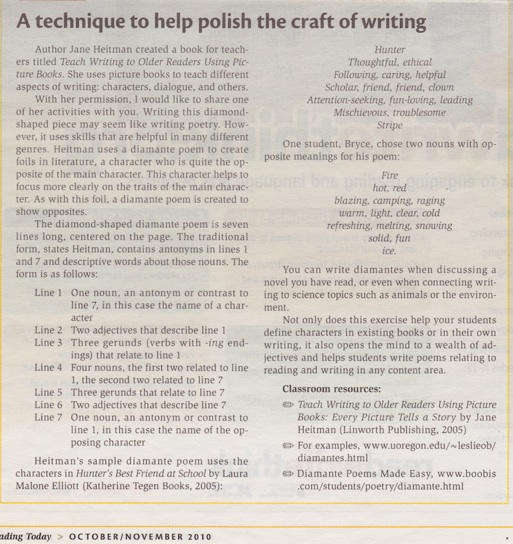
★Teach Writing to Older Readers Using Picture Books: Every Picture Tells a Story Jane Heltman uses picture books to teach different aspects of writing:characters, dialogue, and others.
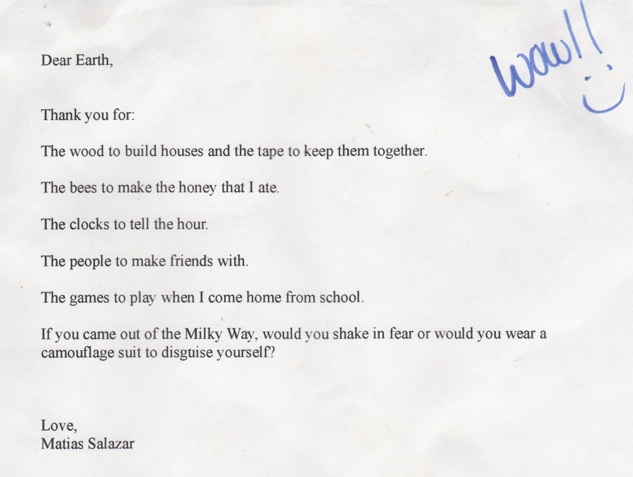
Matias Salazar Third Grade 2018
by Luca, Third Grade Drawn at Home
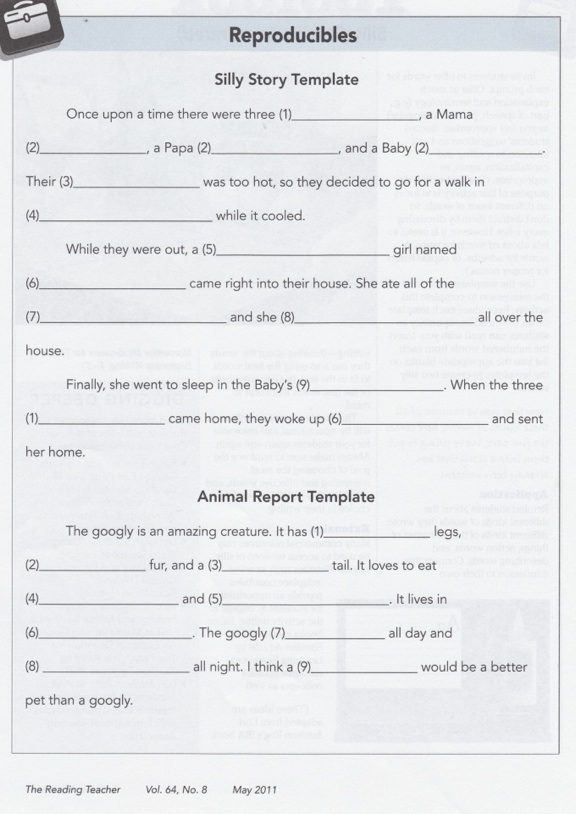
^ Ways to Encourage Young Writers:
1Poetry Puzzler: Both you and your child should write down five fun words in a list. Exchange lists and write poems (both of you) containing the listed words. If this is too easy, make a longer list of words!
2Quick Trip down Memory Lane: Have your child start a story with this sentence: "I remember the first time I ___________. I was…" Once she's chosen the subject, have her write without stopping for three minutes. Tell her she can't reread or edit until time's up. If she can't remember any more and there's still time left, encourage her to start writing a new memory with the same beginning sentence.
3If I Were…: If your child complains he has nothing interesting to write about, ask him to imagine that he could step into the shoes of a favorite character or celebrity. Then have him write a list of things starting with "I would . . ." that details the things he would do, what it would be like, and how it would be different than his life now. For example, if he chooses Superman, he might write, "I would fly to school faster than the bus and never be late. Even if I overslept!"
4Pass It Along (requires three or more people): In this writing game, each person writes a sentence in the story, and then passes it on to the next person to continue. Sounds easy — but there's a trick! Before passing the story, each writer folds the paper so that only the sentence she just wrote is visible to the next writer, who has to continue the story knowing only that last sentence and not any of the previous ones. Decide on how many rounds the paper will make, then read aloud the hilarious results.
5Day in the Life: Have your child pick an object that he uses/carries/sees every day, and write a story from the perspective of that pencil/backpack/TV remote. How does it feel about its job? About the people who use it? Have him write down observations and details about what happens to his chosen object over the course of a day to make the story rich and real.
6Make a Book: To really help your young author feel a sense of accomplishment, collect some of her best writings and bind them up. You can easily do this with cardboard covers, or by putting contact paper over a specially created cover illustration on heavy paper. Have her make a table of contents, a title page, and a bio about herself to include between the covers.
An Assignment given by a 4th grade teacher in Supt. Hynes’ district.
Women’s Day!👧👩í ½í±±♀️í ½í±µí ¾í·“
Mar 8, 2019, 11:04am
It’s Women’s Day. Yay! Soooo, my teacher asked me to write about the woman I most admire. And since it’s WOMAN, not GIRL, the woman I admire most is, my grandma!You know why?
1) Her food is the BEST! Don’t believe me? Try her meatballs and apple pie!
2) She’s catholic, which means, yes it can be sometimes a little annoying when I have to pray before I eat, but, she donates food to the poor. She probably wouldn’t do that if she weren’t. Catholics are encouraged to do good things.
3) My grandma tells AMAZING STORIES! Sometimes they’re not even about her. She can even make you famous! She made a woman over 100 years old famous by making a website about her. Talking is her specialty.
There are many great women, but my grandma is the one that I admire the most. I would love to hear about the woman you admire the most!
My grandson’s teacher has the students do a lot of writing. Their writings are posted on a blog - each student has his own code within the blog. Here is another one he wrote just prior to “Women’s Day.”

★Yes, there is room for soup i the curriculum: Achieving accountability in a collaboratively planned writing program by Trudie Engel and Russell Streich Reading Teacher April 2006
P 5
P4
P3
P 2
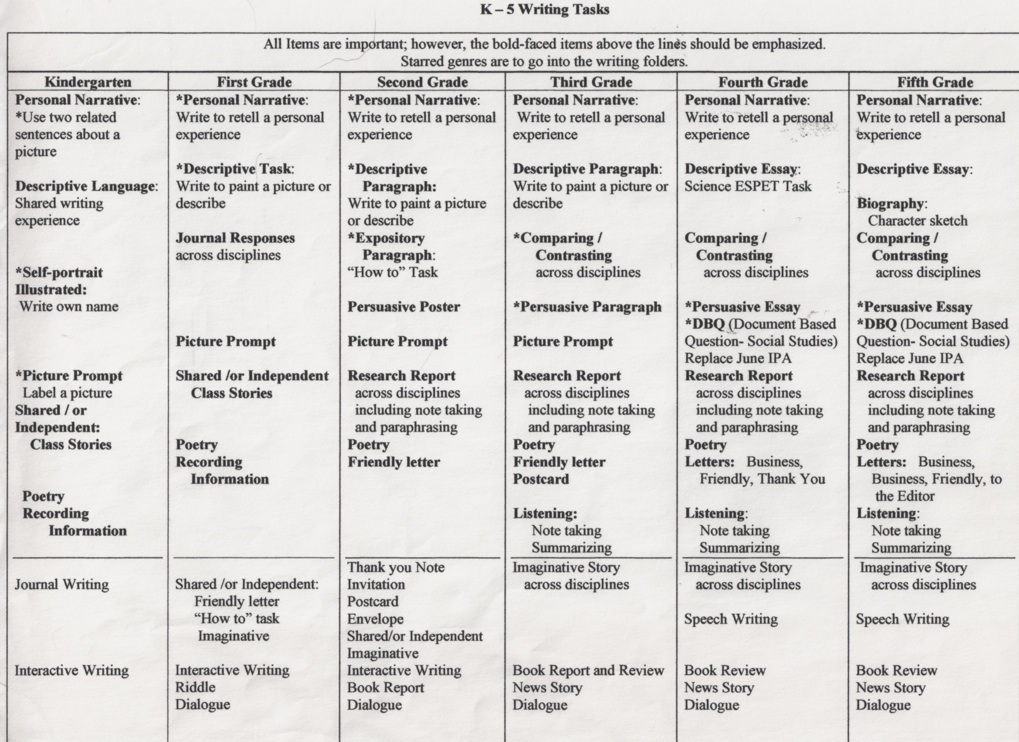
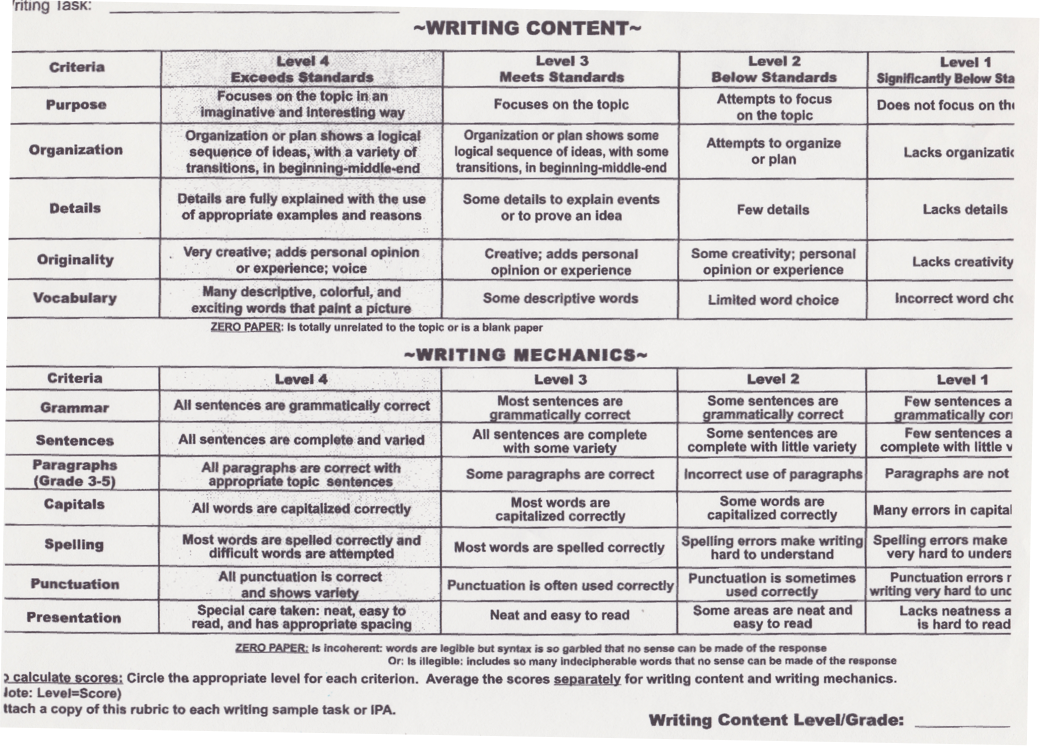
The following charts are in keeping with NYState Learning Standards- not with CC Standards which hinder children instead of encouraging them.
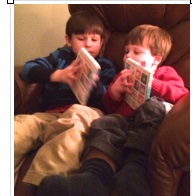
Luca 4.7 Paul 1.9
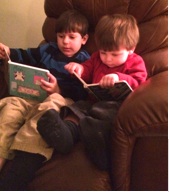
Paul picture read at age 2.
Reading Genre 3/18/15 (Could be labeled Writing Genre)
In the city of Athens, a mortal maiden named Elain picked roses and narcissus flowers in her quiet and quaint garden. Elain appeared content, but only because she knew little outside of her flowers and plants. This was due to her mother's determination to keep Elain as sheltered and deserted as possible. It led to her docile and mindlessly obedient behavior. She turned to face the sky and noticed a sunset beginning to form. Preparing to walk back to her home, she placed the last few flowers in her woven basket. She suddenly noticed a figure approaching the garden. Elain shuddered, as she was not accustomed to visitors.
He made his way toward her with a seashell in his palms. He handed the shell to her with a smile spread on his tanned skin. He said nothing, but extended a hand, with invitation dancing in his eyes. She was reluctant and she hesitated. Thoughts of Proserpina flashed in her mind, but she slowly placed her hand in his, wincing at his cool touch. Without hesitation, the male ran with Elain, his long black hair swaying in the wind. Before she knew it, she was far away from her enclosed garden.
At Elain's home, her mother, Cynthia, grew worried. Elain had usually returned from the garden before supper, but tonight, she was nowhere to be seen. Since word had spread about what had happened to the poor Proserpina, Cynthia had been far too protective of her daughter, allowing her to only roam in the isolated garden. Cynthia failed to see the selfishness in this decision. Her thoughts only consisted of fear that her daughter would be cursed like Daphne and Echo, or abducted like Proserpina. Cynthia told these tales as warnings to her daughter, as if to scare her into isolation. Now, Elain's mother had prepared fresh food from her garden, and alone at the table she waited, and waited, for her daughter to return.
The male introduced himself as Aaron. After racing through woods and other gardens, they had arrived at the most beautiful place Elain would ever come to see. She looked into beautiful and smooth waters and pale sand. She looked to the pink sunset and dropped the basket of flowers as her mouth fell open. Her face was beatific. She instantly adored the sea.
Time passed, and Elain stayed silent, admiring the view. She looked to the still waters and felt the urge to dash to them. She leaped into the blue, emerging herself in the sea. Elain laughed playfully with her golden brown hair soaked as she arose from the sparkling waters. Aaron soon joined her. She fell in love with the ocean and only desired to stay there. However, her joy was soon interrupted. Cynthia came into view and dashed to the sand. Anger shone through her face.
“There you are! My poor daughter! Come home, Elain! And you!” Cynthia turned to Aaron.
“How did you find us?” Aaron asked her, dumbstruck. They both walked to the sand to confront Cynthia.
“I followed the trail. You are a treacherous snake! A deceitful, treacherous snake! Kidnapping my daughter like the beast you are! You are as bad as Pluto himself!” Cynthia fumed, bubbling with anger.
“He is nothing like Pluto! And I am nothing like Proserpina!” Elain shouted to her mother. She had grown to trust Aaron, because he had shown her something that made her truly happy and free, unlike the trapped borders of her garden. Cynthia only shook her head, hot tears forming in her amber eyes. Elain reached for Aaron’s damp hand. “These waters are more of a home than that garden will ever be!” Cynthia gaped, but not at her daughter. Elain, still soaked, turned to see the ocean parting into two halves. Then, Poseidon, the god of oceans and seas, emerged from the depths of the blue water. Everyone began to tremble.
“Curse you!” Poseidon looked to Cynthia. “You have forsaken your daughter and my very seas with your selfish ways! Let her be free and not a prisoner to your paranoia!” He shouted to her. Poseidon had been observing Cynthia and Elain for some time and was unhappy with Cynthia’s greed and obsession with her own daughter. Poseidon suddenly struck down a flash of light to Cynthia, which temporarily blinded Elain. When she opened her shut eyes, Cynthia and Poseidon were nowhere to be found. But when she looked into the sea, she noticed the once still waters were now moving harshly. For Poseidon banished Cynthia to the sea, and this sudden movement was Cynthia trying to gain her daughters attention. Instead of seeking vengeance , Cynthia only craved to have her daughter back. These ripples were waves from her, and since that day, she never stopped. And so the seas constantly form waves, as Cynthia tries to grasp her daughters attention. This is why the oceans have waves: a cry from Cynthia, begging for her precious Elain.
Elain and the Waves
12/11/’18 by Gwyneth Higgins Seventh Grade
Gwyneth’s original Greek mythology story
Through the grades we have seen Gwyneth’s writing skills grow. A strong support was her mother’s reading to her every night as a child starting at birth.
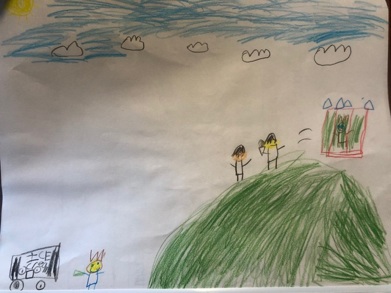
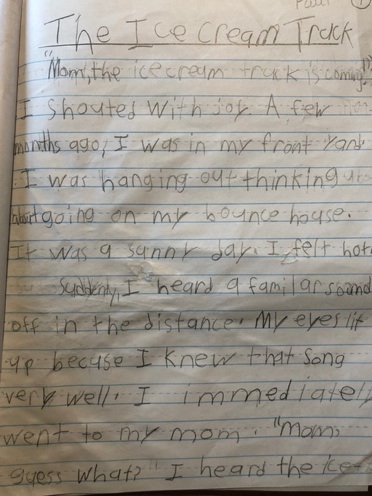
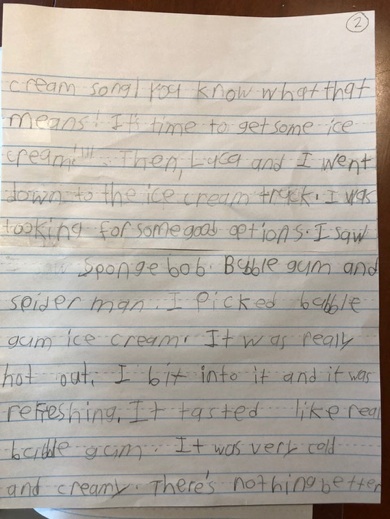
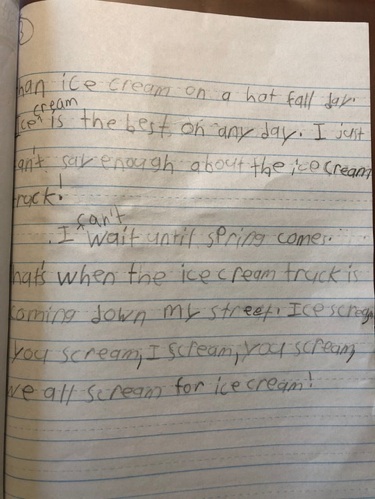
The Ice Cream Truck
Written by Paul, second grade, 1/21/2020
“...looking for some options.”
“....It was refreshing...”
“ ...hanging out thinking...”
“...shouted with joy.”
“... familiar sound
“....off in the distance...
“....immediately ...
Possible Layout for Informational Book Study
•writers ask “What do I think people are dying to know?”
•-think of things you are good at
•-think of a person, place, or thing and information you know about those things (ex-making bed, getting backpack ready, fighting with sibling, soccer, practicing the piano, walking the dog, taking out the trash)
•-think about things you care about (ex-people, recycling)
•-reread your true stories to get ideas of things they know a lot about (friends-fighting/apologizing, how to make one, types of friends, what do you do in a fight with a friend
•-talk to family and friends to tell you what you are good at
The following
^ Ways to Encourage Young Writers:
1.Poetry Puzzler: Both you and your child should write down five fun words in a list. Exchange lists and write poems (both of you) containing the listed words. If this is too easy, make a longer list of words!
2.Quick Trip down Memory Lane: Have your child start a story with this sentence: "I remember the first time I ___________. I was…" Once she's chosen the subject, have her write without stopping for three minutes. Tell her she can't reread or edit until time's up. If she can't remember any more and there's still time left, encourage her to start writing a new memory with the same beginning sentence.
3.If I Were…: If your child complains he has nothing interesting to write about, ask him to imagine that he could step into the shoes of a favorite character or celebrity. Then have him write a list of things starting with "I would . . ." that details the things he would do, what it would be like, and how it would be different than his life now. For example, if he chooses Superman, he might write, "I would fly to school faster than the bus and never be late. Even if I overslept!"
4.Pass It Along (requires three or more people): In this writing game, each person writes a sentence in the story, and then passes it on to the next person to continue. Sounds easy — but there's a trick! Before passing the story, each writer folds the paper so that only the sentence she just wrote is visible to the next writer, who has to continue the story knowing only that last sentence and not any of the previous ones. Decide on how many rounds the paper will make, then read aloud the hilarious results.
5.Day in the Life: Have your child pick an object that he uses/carries/sees every day, and write a story from the perspective of that pencil/backpack/TV remote. How does it feel about its job? About the people who use it? Have him write down observations and details about what happens to his chosen object over the course of a day to make the story rich and real.
6.Make a Book: To really help your young author feel a sense of accomplishment, collect some of her best writings and bind them up. You can easily do this with cardboard covers, or by putting contact paper over a specially created cover illustration on heavy paper. Have her make a table of contents, a title page, and a bio about herself to include between the covers.
Paul, age 12, a class assignment 6/ 2023
Paul's literary response essay BNB: Literary Response Essay
In his novel, "Bud, Not Buddy", Christopher Paul Curtis tells the story of Bud, an orphan living during The Great Depression. Bud, Not Buddy is a historical fiction novel following Bud on his adventures through Flint and Grand Rapids Michigan. He finds old and new friends along his journey to find his father which is presumed to be Herman E. Calloway, a musician from Grand Rapids that turns out to be his grandpa.
Throughout Bud's journey he is aided with multiple acts of kindness from his friends and even some strangers.
The first example of kindness that changed Bud's circumstances happened when Bud met an old man named Lefty Lewis. Once Bud realizes that Herman E Calloway is all the way in Grand Rapids and he is in Flint he starts his journey from Flint to Grand Rapids. He keeps on pushing through from dawn to dusk, and by the halfway mark he is hungry, tired, lost, and scared. According to the text Bud meets a kind stranger and "He handed me the sandwich and the pop and the apple." After Bud is fed he gets to know him better. He learns his name, what he is doing, and why he is out there. After some talking he is invited to take a ride with him and he gladly accepts, but before he could even lift a finger he is fast asleep. After Bud fell asleep he had been driven to Lefty Lewis's daughters house, and he started listening in on their conversation. Then the author states that Bud got up and headed for the bathroom and "After I got out of the bathroom, I saw that Mrs.Sleet (Lefty's daughter) had put some clean clothes on the bed."
This shows Lefty giving Bud some food to Bud which was a big deal in the great depression because the people back then were so poor and vulnerable to starvation. It also shows us Mrs.Sleet giving Bud some new clean clothes which were also important in The Great Depression to keep warm from dierent forms of weather like snow or rain.
The second example of kindness that changed Bud's circumstances happened when Bud had been helped by Mrs. Thomas at the Sweet Pea Diner. Once Bud convinces the band to give him a shot they oer Bud to go to the Sweet Pea Diner which is considered one of the best restaurants in Grand Rapids. Once they get there Bud is overwhelmed by all the options, so Mrs. Thomas helps him chose, and once he tastes the food he thinks it's the best thing he's ever had! Bud is having the time of his life and he is so thankful for everyone around him that he starts bawling his eyes out from joy. According to the author once Mrs. Thomas sees this she rush's right over to help calm down Bud and says "Its ok baby, ok. I know sweetheart, I know."
over to help calm down Bud and says "Its ok baby, ok. I know sweetheart, I know."
These small words helped Bud stop crying and calm him down when he was in a time of need and when no one was helping him at all. This also shows that Mrs.Thomas is caring, helpful, and compassionate to people that she cares about.
The last example of kindness that changed Bud's circumstances happened when Bud missed the line for food. Once Bud realizes it's almost closing time to get food he bolts over to the mission, But he realizes he is too late. A scared and devastated Bud tries to bargain with the man running the stand, but he just won't let him in. According to the text Bud accepts his defeat but right when he is about to leave, a burly old man yanks him over and calls him Clarence so "I got ready to say 'My names not Clarence, and please don't choke me, sir, I'll leave' but as soon as I opened my mouth he gave me a shove and said, 'Get back in line with your momma!'"
This shows that that they are most likely trying to help starving people like Bud even though they have no clue who they are. It also shows that Bud is very lucky because without those people he might have gotten fatigue or maybe even met the end of the road from the clutches of starvation, one of the biggest threats to humanity to this day.
In conclusion Bud has been helped with lots of dierent acts of kindness from tons of dierent people like Lefty Lewis and Mrs.Thomas with their bravery and helpfulness to Bud.
The quotes I provided support my claim that Bud has been helped with multiple acts of kindness by showing strangers help Bud by giving him food, mental support, clothes, and a place to stay just because they wanted to spread kindness whilst they were in a time of crisis and poverty.
But at the end of the day there are a lot of people who think the have got it so bad and there is no out one there in the whole world to help or talk too, but they need to remember that there are other people that have it way worse. Some people have had their family taken away, been abused, just like Bud. So I want you to remember that there is always a solution to your problems and there will always be at least one person that can, and will help you out when times get tough.
On the “Family Rdg./Back Packs” in the Funtime /Bedtime article you will see where the source of Paul’s skills comes from. He also wrote “The Ice cream Truck” Posted above.
Constructed by Mary DeFalco Updated 7/5/24
